Plants paper draft
Previously:
Comparative Analysis of Deep Learning Techniques for “in-the-wild” Plant Classification
Abstract
Introduction
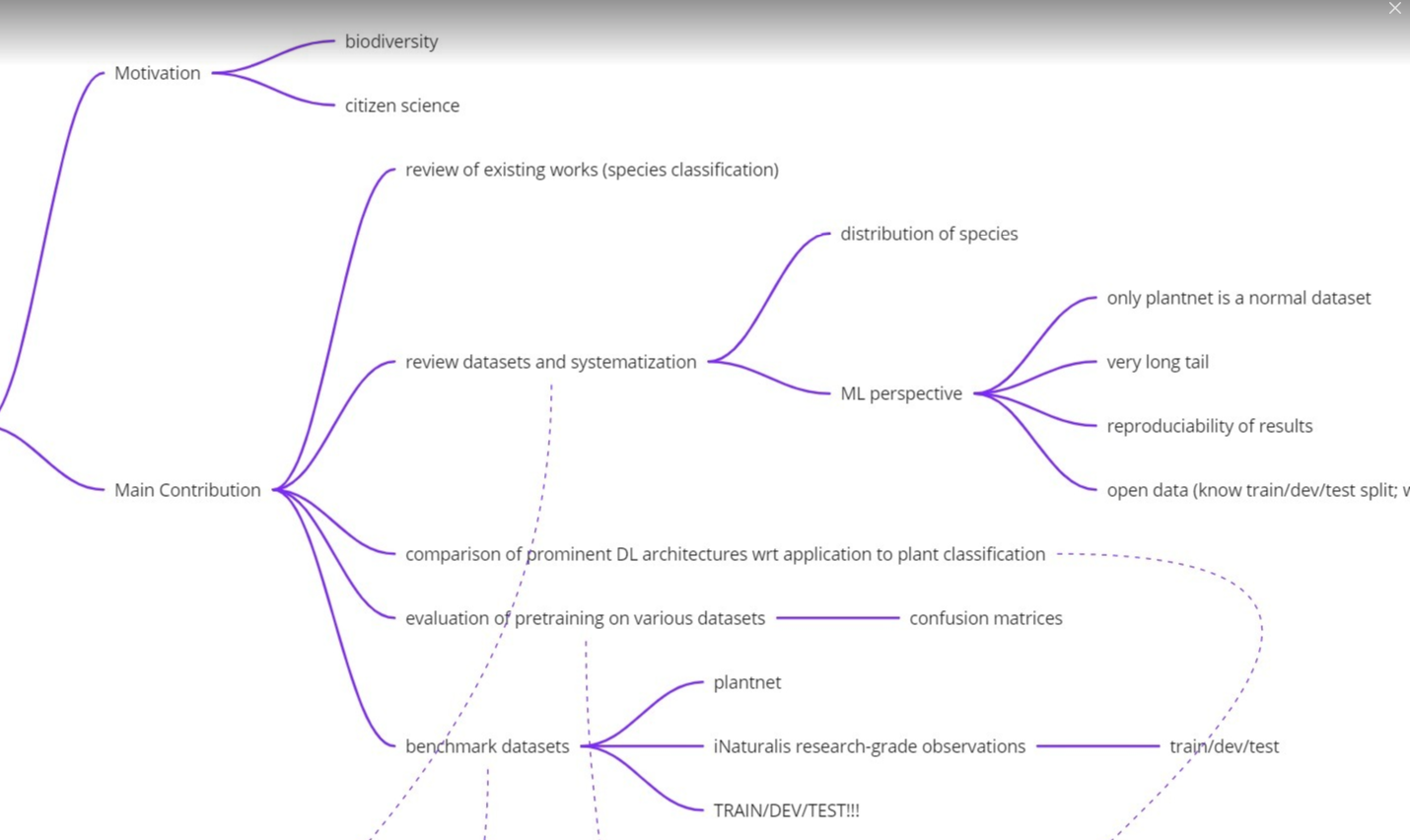
- For almost two decades, machine learning has been successfully(?) applied to plant classification and related tasks, from the use of hand-crafted features with SVM and Random Forest for tasks like leaf1 and flower2 identification, to the Computer Vision and Deep Learning techniques predominant in recent (WHICH? EXAMPLES?) years that achieved impressive results on a wide variety of tasks.
- For example, in agriculture, Deep Learning (DL) is employed for crop/plant/fruit recognition/counting, disease detection, yield estimation, classification - not just by species/taxon but also by seed presence, freshness, phenology (e.g. maturity), etc.: <
@mamatAdvancedTechnologyAgriculture2022Advanced Technology in Agriculture Industry by Implementing Image Annotation Technique and Deep Learning Approach (2022) z/d>
- For example, in agriculture, Deep Learning (DL) is employed for crop/plant/fruit recognition/counting, disease detection, yield estimation, classification - not just by species/taxon but also by seed presence, freshness, phenology (e.g. maturity), etc.: <
- But one of the most interesting synergies happened, and is happening, at the intersection of ML, citizen science, and biodiversity.
- Biodiversity loss
- TODO: is bad
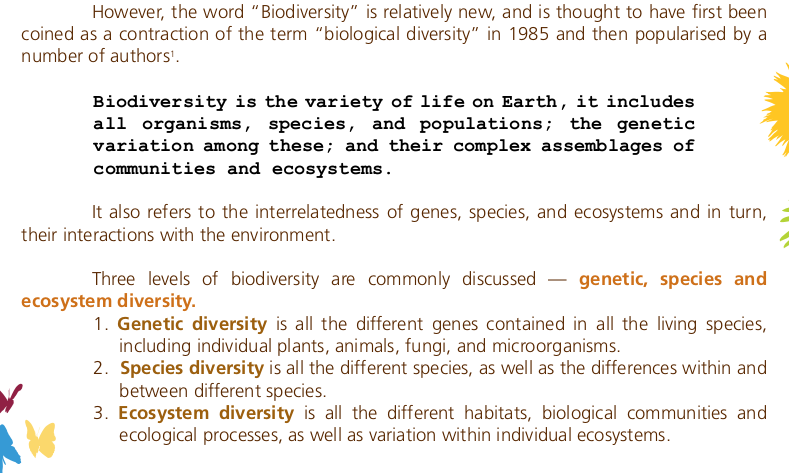
- Biodiversity can be defined as “a measure of variation at the genetic (genetic variability), species (species diversity), and ecosystem (ecosystem diversity) level” 3
- In the context of
- TODO: is bad
Motivation
Biodiversity
- Biodiversity monitoring helps biodiversity
- Helps tracking the situation
- Helps prioritization of resources
Citizen science
- Is cool
- Really nice for reasons such as
- getting people interested in science
- wisdom of the crowd
- if the crowd doesn’t have much wisdom, many pair of eyes can still be good/useful!
- Really nice if you don’t really know what to track, or want to analyze data post-factum
- As opposed to clear experiments where you take expensive scientists to track specific plant types
Main contribution
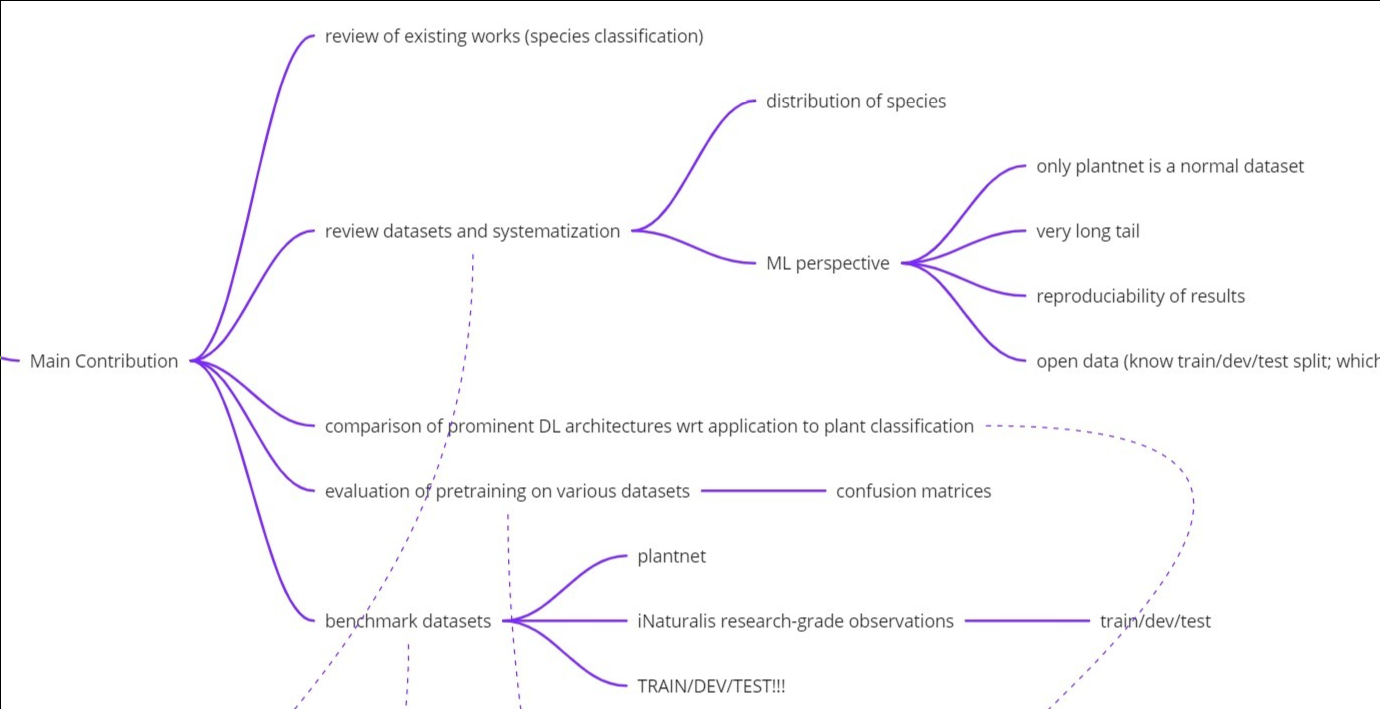 The main contributions of this paper are:
- A review of existing literature on the topic of using ML for plant species classification
- Establish a baseline
Related work
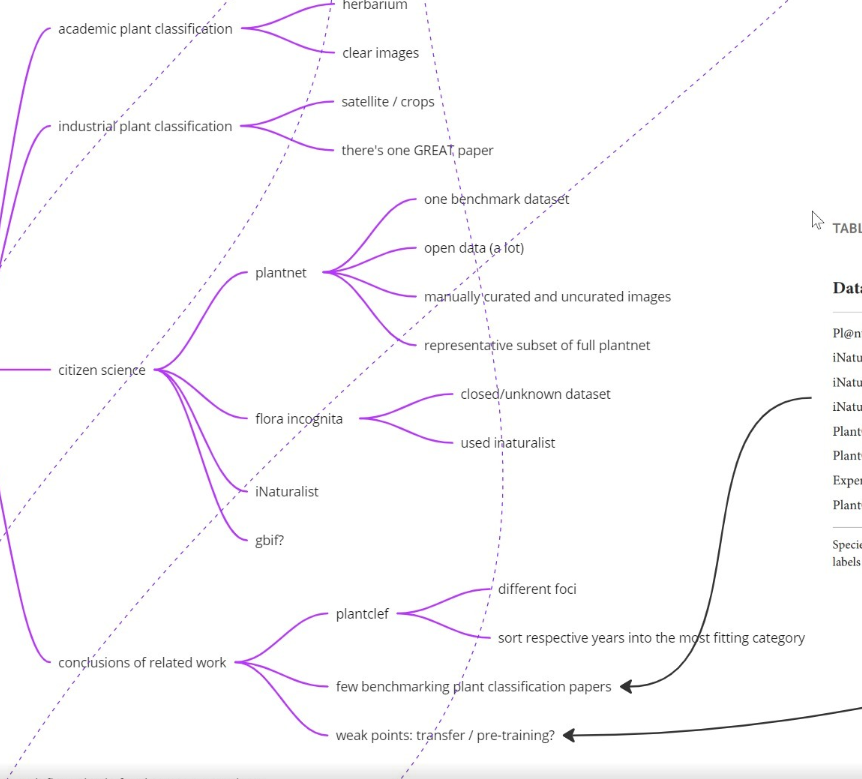
Supervised Pretraining
Our results with ViT nicely match with page 9 of <@picekPlantRecognitionAI2022 Plant recognition by AI (2022) z/d>
-
- “Leaf and bark recognition was the only application before deep learning where automatic plant species identification allowed to reliably tackle complex species recognition tasks.” (Picek et al., 2022, p. 3) (pdf) <
@picekPlantRecognitionAI2022Plant recognition by AI (2022) z/d> - AND THEN FOLLOW CITATIONS
- (The paper really nicely describes THE BEGINNING)
- “Leaf and bark recognition was the only application before deep learning where automatic plant species identification allowed to reliably tackle complex species recognition tasks.” (Picek et al., 2022, p. 3) (pdf) <
-
TODO I’m sure this happened, find examples ↩︎
-
according to a charming United Nations pamphlet quoted by Wikipedia:
 ↩︎
↩︎
Nel mezzo del deserto posso dire tutto quello che voglio.
comments powered by Disqus